Randy Weston - Uhuru Africa
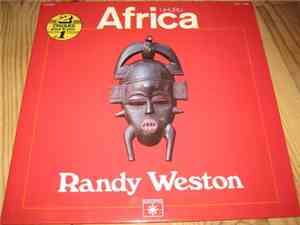
| Genre: | Jazz, Non Music |
| Singer: | Randy Weston |
| Title: | Uhuru Africa |
| Short-info: | Label:
Roulette – DRY 21006,
Vogue – DRY 21006
Type: 2 x Vinyl, LP, Compilation Country: France Date of released: 1976 Category: Jazz, Non-Music Style: Post Bop, Modal, Political |
| MP3 album size .rar: | 1383 mb |
| APE album size .rar: | 1384 mb |
| Digital formats: | MP3 FLAC XM ADX AC3 VOX MP4 AUD AU |
- 1383 downloads at 53 mb/s
RAR archive MP3 format
- 1384 downloads at 43 mb/s
RAR archive FLAC format
Tracklist Hide Credits
| Uhuru Africa | ||
| 1st Movement | ||
| A1 | IntroductionWritten-By – Langston Hughes |
2:38 |
| A2 | Uhuru KwanzaWritten-By – Randy Weston |
5:52 |
| 2nd Movement | ||
| A3 | African LadyWritten-By – Hughes*, Weston* |
8:35 |
| 3rd Movement | ||
| B1 | BantuWritten-By – Randy Weston |
8:02 |
| 4th Movement | ||
| B2 | Kucheza BluesWritten-By – Randy Weston |
7:52 |
| Piano A La Mode | ||
| C1 | Earth Birth | |
| C2 | Nobody Knows The Trouble I Have Seen | |
| C3 | Saucer Eyes | |
| C4 | I Got Rhythm | |
| D1 | Gingerbread | |
| D2 | Cocktails For Two | |
| D3 | Honeysuckle Rose | |
| D4 | Fe-Double-U Blues |
Companies, etc.
- Recorded At – Bell Sound Studios
Credits
- Alto Saxophone, Baritone Saxophone – Cecil Payne (tracks: A1 to B2), Sahib Shihab (tracks: A1 to B2)
- Alto Saxophone, Flute – Gigi Gryce (tracks: A1 to B2)
- Arranged By – Melba Liston (tracks: A1 to B2)
- Baritone Vocals – Brock Peters (tracks: A1 to B2)
- Bass – George Duvivier (tracks: A1 to B2), Peck Morrison (tracks: C1 to D4), Ron Carter (tracks: A1 to B2)
- Design, Photography By – Arnold Meyers (tracks: A1 to B2)
- Drums – Charlie Persip (tracks: A1 to B2), Connie Kay (tracks: C1 to D4), G.T. Hogan* (tracks: A1 to B2), Max Roach (tracks: A1 to B2)
- Flute, Guitar – Les Spann, Jr.* (tracks: A1 to B2)
- French Horn – Julius Watkins (tracks: A1 to B2)
- Guitar – Kenny Burrell (tracks: A1 to B2)
- Liner Notes – Michael Cuscuna
- Lyrics By – Langston Hughes (tracks: A1 to B2)
- Music By, Piano – Randy Weston
- Narrator – Tuntemeke Sanga (tracks: A1 to B2)
- Percussion – Armando Peraza (tracks: A1 to B2), Babatunde Olatunji (tracks: A1 to B2), Candido (tracks: A1 to B2)
- Producer – Lee Kraft (tracks: C1 to D4), Teddy Reig (tracks: A1 to B2)
- Saxophone, Clarinet – Budd Johnson (tracks: A1 to B2)
- Saxophone, Piccolo Flute – Jerome Richardson (tracks: A1 to B2)
- Soprano Vocals – Martha Flowers (tracks: A1 to B2)
- Tenor Saxophone, Flute, Oboe – Yusef Lateef (tracks: A1 to B2)
- Trombone – Jimmy Cleveland (tracks: A1 to B2), Quentin Jackson (tracks: A1 to B2), Slide Hampton (tracks: A1 to B2)
- Trumpet – Benny Bailey (tracks: A1 to B2), Clark Terry (tracks: A1 to B2), Freddie Hubbard (tracks: A1 to B2), Richard Williams (tracks: A1 to B2)
Notes
Gatefold sleeveA, B recorded 1960 at Bell Sound Studios New York USA
C, D recorded Spring 1957 New York USA
UHURU AFRIKA
On a recent trip to Nigeria at the time of Independence, I listened to much Nigerian jazz, both live and recorded. In this music of the New Africa, it seems to me, the American influence is considerable. Tony Scott has been to South Africa. Louis Armstrong has attracted enormous crowds to racetracks and outdoor stadiums all over the continent. Dizzy Gillespie has charmed not only snakes but hep and unhep cats alike. American recordings have penetrated to the farthest jungle jukebox.
Jazz is a popular commodity with all African radio stations. And Victor Ola-lya's Yoruba band in Lagos calls itself The Cool Cats. To the African drum beat have been added Birmingham breaks, Harlem riffs and Birdland trimmings. The basic beat of jazz which began in Africa, thence transplanted to the New World, has now come back home bringing with it most of the contemporary American additions -from blues to post-bop.
That jazz owes its basic debt to Africa, no one disputes. Therefore contemporary Africans did not really have to learn to play jazz because their own tribal music from time immemorial has contained the major elements that distinguish jazz from other musical forms. In a land still largely tribal in composition, music belongs to everybody and participation in its making is taken for granted for all who wish to take part.
Persistent and repetitive percussion is the general base for whatever other vocal or instrumental effects may be created against it. Drums, rattles, sticks, stones, iron gongs and bells may all be used separately or simultaneously to produce a series of intricate syncopated rhythms, often very complex in beat and off-beat, and possessing a dynamic drive impelling to body movement.
But African music is seldom created purely for listening purposes. It is more often a social force of communal nature, celebrating a puberty rite, a wedding, a successful hunt, initiation of a chief, a homecoming, or some other occasion of importance to all of the people. Seldom is it for dancing indulged in for its own sake - except in today's urban communities. Always in African music is that basic beat stemming from percussion - that highly syncopated beat that gives jazz its distinct quality.
In African tribal music there are a variety of free forms traditional in overall pattern, but which allow for spontaneous improvisation within the form itself. In native musical groups a leader only becomes leader when he himself can spontaneously create exciting additions to what his fellow musicians -often the whole tribe- are already doing. There is no conductor.
Among primitive players nobody has to give a downbeat. But the most creative musicians in the group are those most highly respected. Randy Weston is a highly creative musician. So is Olatunji. Likewise, Cecil Payne, Sahib Shihab, Gigi Gryce, Benny Bailey, Les Spann, and the other musicians here gathered -not to speak of Melba Liston who officiated at the ceremonies attendant upon the making of this disc,
Uhuru Afrika (Freedom, Africa!).
At the two recording sessions of the American salute to an emerging continent, there was at times so much going on, musically speaking, that nobody in the studio could follow a bar-tight score. But at such moments, no one needed to do so.
Out of the rhythmic fervor engendered, waves of spontaneous creativity rose on the pulse of a common musical emotion to break against the microphones in sprays of exciting sounds - and all this within the basic pattern of an overall conception. Uhuru Afrika is a composed composition, Weston's -and an ordered and arranged composition- Liston's. But within its framework - as in both African tribal and much urban music - there is room for the personal creativity of each musician to find the moment, or moments, for his own individual salute to music and, through music, to freedom and to Africa.
ABOUT THE MUSIC
Uhuru Kwansa
Candido begins with a sonorous drum call to Uhuru - Freedom - Uhuru Kwanza - Freedom First! Tuntemeke Sanga of Tanganyika intones as the drums continue:
Africa, where the great Congo flows!
Africa, where the whole jungle knows
A new dawning breaks. Africa!
A young nation awakes! Africa!
In his own tongue, Kiswahili, Sanga salutes the new Africa, Uhuru!
The freedom wind blows!
Out of yesterday's night Uhuru –
Freedom! Uhuru! Freedom
Olatunji, Armando Perazo and Max Roach join Candido as, with bells on wrists and the striking of the jaw bone of an ass, the conga and bongo drums combine African rhythms with American to introduce the melodic percussion of Randy Weston's piano. Here begins the main body of the first movement of this suite in four parts.
The basses of George Duvivier and Ron Carter are joined by the reeds of Cecil Payne, Budd Johnson, Sahib Shihab, Gigi Gryce, then Jerome Richardson's piccolo. For a brief passage the basses are featured, then followed by the ever more insistent drums backing the mounting trumpets of Clark Terry, Freddie Hubbard, Benny Bailey and Richard Williams. The french-horn of Julius Watkins and the deep trombones of Jimmy Cleveland and Slide Hampton combine in persistent fanfare as the call of freedom mounts, and Olatunji puts his heart into the beat of his drum. Then only the basses are left whispering freedom, Uhuru - Uhuru ...
African Lady
Sunrise at dawn,
Night is gone –
I hear your song.
African lady.
The dark fades away,
Now its day,
A new morning breaks.
The birds in the sky all sing
For Africa awakes.
Bright light floods the land
And tomorrow's in your hand,
African lady.
The flutes of Yusef Lateef and Les Spann are awakening birds. Benny Bailey's muted trumpet sings a sunrise song behind the lyric voice of Martha Flowers. Then Cecil Payne greets the morning with a joyous solo punctuated by the brasses. Now Brock Peters sings:
Goddess of sun
And of sea,
My lovely one,
African lady,
Your eyes softly bright
Like the light
Of stars above.
Smile and the whole world sings
A happy song of love.
Dark Queen! In my dreams
You're my Queen!
My Queen of Dreams,
African lady!
Bantu
The Third Movement, begins with a briefly beautiful french-horn solo by Julius Watkins, then Weston's intermittently drum-like piano awakens the drums themselves to jubilant life as the brasses and the reeds burst forth. Olamnji takes to the flugelhorn and adds to the general jubilation with a felicitous solo. Armando and Candido play the great conga drums. Olatunji changes instruments to beat against his chest a round beaded gourd, the shakera, a handsome looking tribal instrument from his Nigeria. Weston deserts the piano to scrape in rhythm the jaw bone of an ass, and Shihab, in the African fashion of making percussion from anything at hand, picks up the beat with an empty bottle and a metal opener. Charlie Persip is on the snare drum, the brass drum and cymbals. Finally, Olatunji solos on the biggest drum of all and the other drummers join him, as the full band comes back briefly to close their Bantu salute to freedom.
The Kucheza Blues
Had I been in charge of naming these sequences, I would have called the final movement "The Birmingham-Bamako Blues," for in this section there are overtones of both Alabama and Africa, Dixie and the Negro Motherland. The final sequence is called Kucheza Blues meaning, in Kiswahili, the Swinging Blues - so christened by Tuntemeke Sanga. This is a happy segment in which, following Charlie Persip's drum introduction, the piano carries the melody accompanied by Kenny Burrell's guitar, with Freddie Hubbard and Benny Bailey lifting their trumpets, Jimmy Cleveland his slide trombone, Gigi Gryce on alto, Budd Johnson, tenor, and Armando and Olatunji at the hand drums.
The Kucheza Blues was preformed before the recording mikes in true improvisatory style - without a score. Preceding the recording of this blues there was only a brief run-through with Randy Weston playing the melodies and, by way of "arrangement," Melba Liston suggesting this here or that there - largely by gestures, humming's and osmosis. But every Afro-American musician worth his salt has the blues in his bones, feels the blues, knows the blues, and no matter how "contemporary" he may be, loves the blues. What music ever had more soul? Budd Johnson's short but wonderful solo in 3/4 time lets him have his say before he turns the melody over to Benny Bailey who rises to the occasion swingingly. Jimmy Cleveland takes his turn on the trombone, then Gigi Gryce, followed by Freddie Hubbard, muted. Each to his own blues! Kenny Burrell's guitar swings in its inimitable fashion. And Randy Weston, at the piano, leader and creator of this first Afro-American jazz salute to the New Africa, rounds out the session, guiding the ensemble - as Swahili jazz musicians might say - to a Kucheza end. Uhuru, Afrika!
1960 Langston Hughes
Other versions
| Category | Artist | Title (Format) | Label | Category | Country | Year |
|---|---|---|---|---|---|---|
| RE-130 | Randy Weston | Bantu (2xLP, Comp) | Roulette | RE-130 | US | Unknown |